The idea of Dutch wine still raises eyebrows. A landscape defined by flat fields, coastal winds and cool, damp weather hardly sounds like the natural home of ambitious viticulture. Yet something quietly remarkable has happened over the past decade: vineyards have matured, producers have sharpened their focus, and the wines now show a clarity that was difficult to imagine not long ago.
The shift has been steady but unmistakable. What once felt like a pioneer‑driven “let’s see what happens” movement has grown into a small but confident wine culture. Producers understand their sites, their grapes and their stylistic direction. In the south‑western province of Zeeland, close to Middelburg and Vlissingen, De Kleine Schorre has become one of the clearest examples of how far Dutch wine has come.
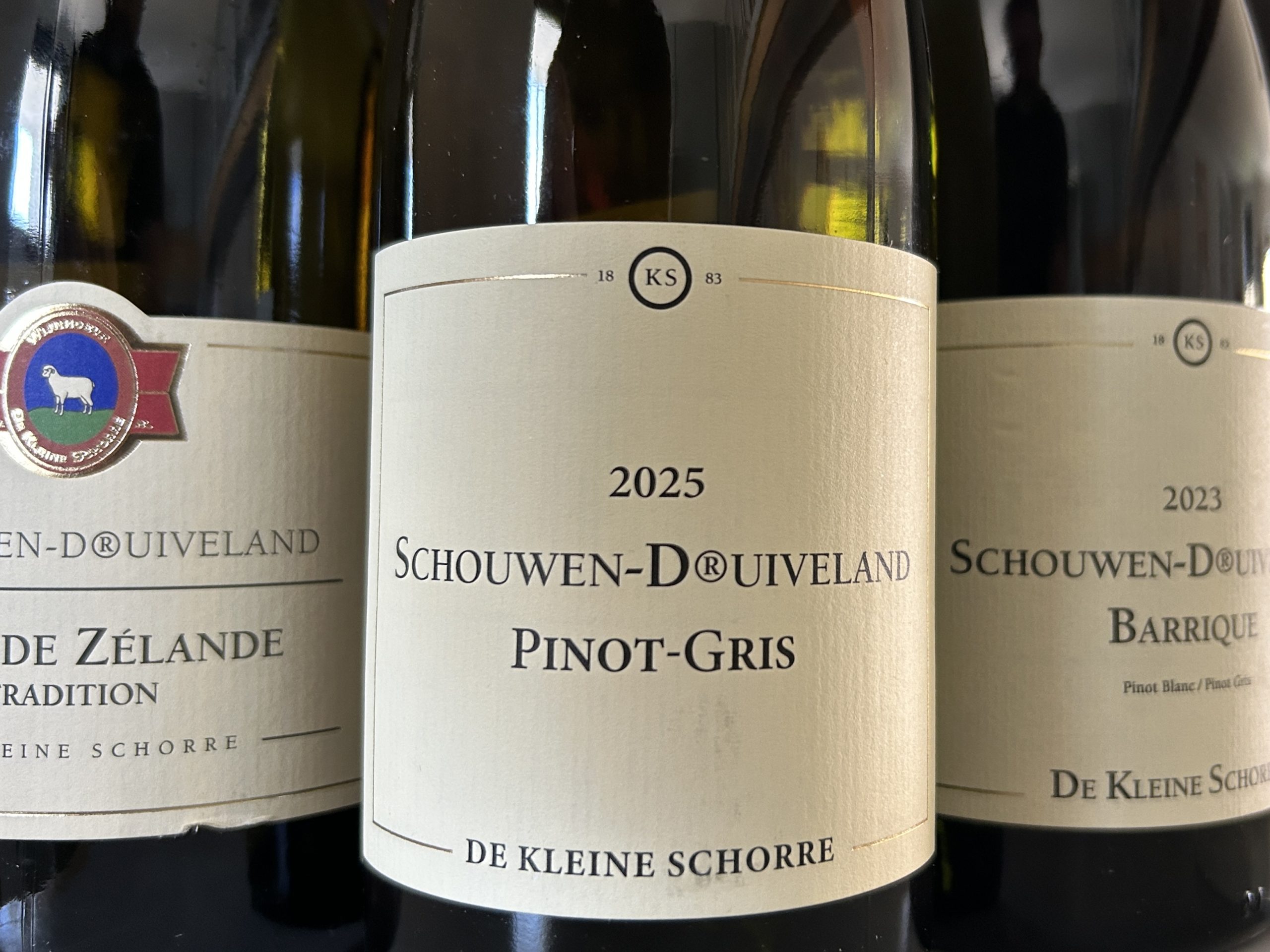
The climate has also moved in a helpful direction. Longer seasons and more stable temperatures allow grapes to ripen more reliably, while the natural coolness preserves freshness. The result is a style that feels clean, precise and recognisably northern. You sense it clearly in wines like Schouwen‑Druiverland Pinot Gris 2025, where the cool profile gives a bright, juicy and straightforward expression.
The Dutch wine map is far more varied than many expect. In the south, near Maastricht, lies Limburg, one of the country’s most established regions. Producers such as Apostelhoeve have helped define the crisp, cool style that has become a Dutch signature. Moving east towards Arnhem and Nijmegen, Gelderland offers a more experimental edge, with small estates working with hybrid varieties suited to northern climates.
Around Eindhoven and ’s‑Hertogenbosch, Noord‑Brabant focuses mainly on light whites and stainless‑steel precision. Further north, close to the city of Utrecht, small producers craft modern, clean wines with a quiet confidence. And in the far north, near Groningen and Leeuwarden, Friesland and Groningen deliver wines with marked acidity and a style that feels distinctly local.
Zeeland remains the region that stands out internationally. Its mix of sand, clay and chalk gives wines a maritime clarity that is easy to recognise. De Kleine Schorre spans a wide stylistic range here — from fresh Pinot Gris to traditional‑method sparkling wine and barrel‑aged whites with real depth.
Several grape varieties have proven particularly well suited to Dutch conditions. Solaris, Souvignier Gris, Johanniter and Regent ripen reliably and produce modern, clean wines. Classic grapes such as Pinot Noir and Chardonnay also appear, though usually in small quantities and with a cool, elegant profile. Pinot Gris is one of the most successful varieties — both in fresh expressions and in fuller styles like Schouwen‑Druiveland Barrique 2023, where barrel fermentation adds notable weight.
Dutch producers typically work on small plots, where even minor changes in weather or ripeness can be felt in the final wine. Stainless steel is widely used to preserve clarity, while barrel ageing is applied more selectively. Ambitious producers are not afraid to explore it when the fruit allows.
The Dutch style has a clear identity. White wines are the country’s strongest asset, while sparkling wines are gaining momentum with a focus on balance and purity. Reds exist, but they tend to be light and slender.
Production volumes will never turn the Netherlands into a major wine nation, but quality in the niche segment is beginning to take shape. The best producers deliver wines that can stand alongside other northern regions, with a style that feels modern and distinctly their own.
Dutch wine is a reminder of how climate shifts reshape the map. Countries once considered too cold are finding their voice. That makes the Netherlands one of Europe’s most intriguing small wine nations — not because it aims to dominate, but because it quietly creates something authentic and unmistakably its own.
Here are three wines that show three very different sides of Zeeland.
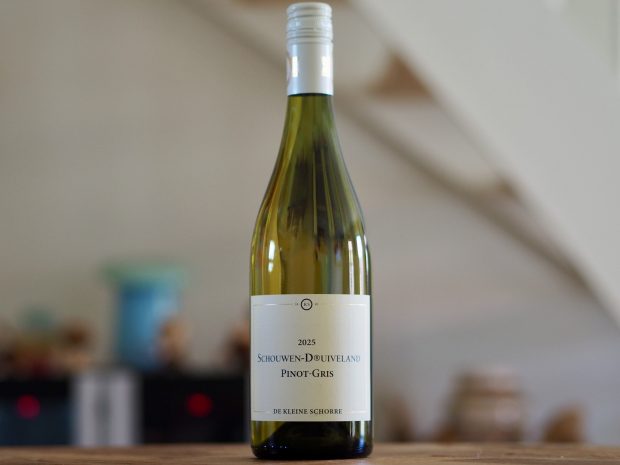
De Kleine Schorre – Schouwen‑Druiverland Pinot Gris 2025
Netherlands, Zeeland
White – Pinot Gris
Points: 94 – Excellent
Stars: 5 – Impressive value
Price category: Mid‑High Price
-> De Kleine Schorre
Pinot Gris from Zeeland is one of the most striking surprises in the 2025 vintage. It shows how well the region can balance freshness with a touch of sweetness. The expression is bright and juicy, and the maritime influence adds a natural tension that suits the style. Light fruit tones and a subtle sweetness shape the aroma, while the palate stays clean and straightforward from start to finish. Stainless‑steel fermentation keeps the wine crisp, and the vintage brings a cool profile without sharp edges. This sits comfortably between energy and softness, making it a superb match for shellfish, oysters and light summer dishes. The combination of freshness, gentle sweetness and coastal clarity makes it one of the most impressive Pinot Gris wines tasted this year.
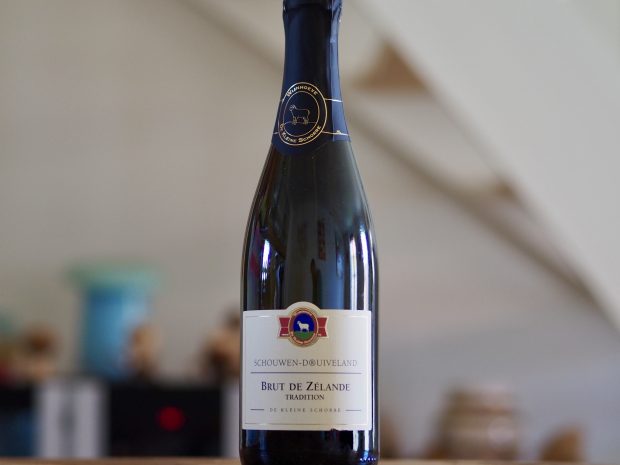
De Kleine Schorre – Schouwen‑Druiveland Brut de Zélande Tradition
Netherlands, Zeeland
Sparkling – Pinot Gris / Auxerrois / Rivaner
Points: 93 – Very good
Stars: 4 – Worth the money
Price category: High Price
-> De Kleine Schorre
Brut de Zélande Tradition shows that the Netherlands can produce sparkling wine with focus and finesse. Fresh citrus and green‑apple notes define both aroma and flavour, supported by the traditional‑method fermentation that adds a subtle hint of baked brioche. It brings depth without overshadowing the fruit, though the complexity could easily carry even more weight. The palate is cool and taut, with a refreshing mineral edge in the finish. The mousse is fine and supports the clean, understated style, making this an excellent choice for oysters, shellfish, New Year’s Eve or a bright summer afternoon. The northern clarity and lack of unnecessary embellishment make it a strong example of where Dutch sparkling wine is heading — and how far it has already come.
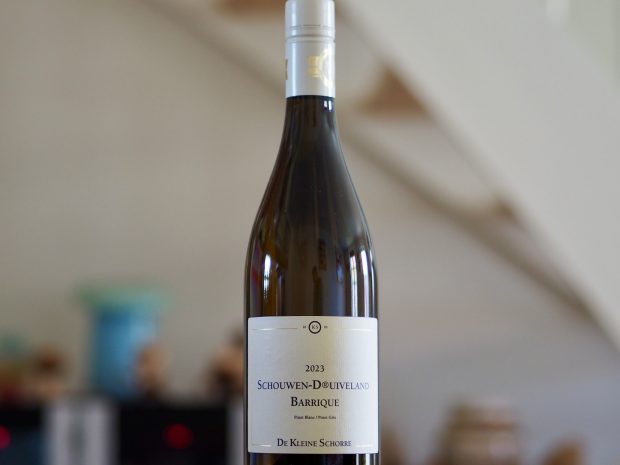
De Kleine Schorre – Schouwen‑Druiveland Barrique 2023
Netherlands, Zeeland
White – Pinot Gris
Points: 92 – Good
Stars: 3 – Slightly overpriced
Price category: High Price
-> De Kleine Schorre
The Barrique expression of Pinot Gris offers a completely different angle compared to the stainless‑steel wines from Zeeland. Barrel fermentation brings warmth, spice and a lightly toasted character, creating a fuller style that still leans on the region’s natural coolness for balance. Vanilla and ripe fruit sit quietly in the aroma, while the palate shows a rounded depth that comes close to tipping into heaviness. The pronounced barrel influence demonstrates that serious white wine with real weight is possible in the Netherlands, though the freshness feels a little too hidden. It is a wine with clear ambition and notable depth — but one where the oak takes more space than ideal.