
Slovakia is one of the Central European wine countries that is truly beginning to move. Geographically a small nation, but with big ambitions, and in recent decades this has made Slovakia a country worth paying attention to. Although Slovakia is still unfamiliar territory for many, the country offers a remarkable breadth of terroir, grape varieties and styles, with elegance, finesse and aromatic wines waiting to be explored.
A country shaped by mountains, rivers and historic borders
Slovakia sits in the heart of Central Europe, surrounded by the Czech Republic, Poland, Ukraine, Hungary and Austria. It is a country where the landscape shifts character within a few kilometres: from the high Tatra mountains in the north to the softer hills and warm valleys in the south. This geographical variation is one of the keys to the country’s wine identity. Most vineyards lie in the southern part of Slovakia, where the climate is milder and more stable. Here, Central European coolness meets generous sunshine, resulting in wines that combine freshness and aromatic clarity with ripe fruit. The climate resembles a blend of Austria and Hungary, yet retains its own tone thanks to the cool nights and marked temperature shifts created by the northern mountains.
The regions – from Malokarpatská to Tokajská Slovakia has several official wine regions, each with its own character. Malokarpatská, close to Bratislava, is the country’s best‑known area. Here you find limestone‑rich hills, cool mountain winds and a tradition of elegant white wines and light, fresh reds.
Further east lie Nitrianska and Južnoslovenská, where the climate is warmer and more stable. Grapes receive more sun, and the wines often become fuller and more mature in style. Nitrianska is home to the producer Velkeer — an estate that offers a clear picture of the region’s modern, precise and terroir‑driven approach.
In the easternmost part of the country lies Tokajská — the Slovak section of the historic Tokaj region. The soil is volcanic, the climate distinctive, and the traditions deeply rooted. Slovak Tokaj is still less known than its Hungarian counterpart, but quality is high, and several producers are working to create wines that can stand alongside the best in the region.
Grape varieties – local originals and international classics
Slovakia has a fascinating mix of local grapes and international varieties. Among the local whites, Devín is one of the most distinctive, producing aromatic wines with floral tones and fresh, clean acidity. Pálava gives fuller and more spicy wines, while Riesling and Grüner Veltliner represent the Central European tradition. For red wines, Frankovka Modrá (Blaufränkisch) is the most characterful local grape, offering dark fruit, spice and a firm structure. Dunaj, a modern crossing, has gained attention for its deep colour, ripe fruit and marked personality.
Purity, freshness and terroir in the glass
Slovak wines have a particular purity in both aroma and flavour. This stems partly from the climate and partly from a winemaking tradition that values precision and balance. The white wines are often aromatic without becoming overly perfumed, and the best Riesling‑ and Grüner‑based wines have a mineral tone that is clear without being sharp.
The red wines range from light, fresh Frankovka expressions to deeper and more modern Dunaj wines. What they share is a balance between fruit and structure, where alcohol rarely dominates and acidity gives the wines a gastronomic versatility suited to both Central European and Nordic cuisine.
Velkeer – a modern window into Nitrianska
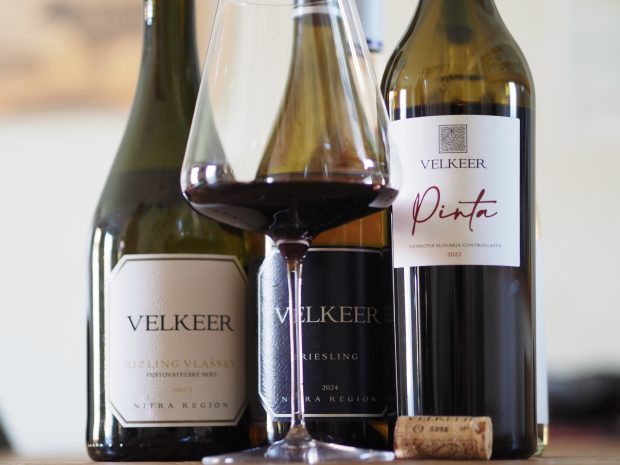
The producer Velkeer is a strong example of Slovakia’s new wine movement: terroir‑driven, clean, aromatic and with clear respect for both local grapes and international styles. Here is an overview of six wines that show the breadth and quality Velkeer represents.
Velkeer Riesling 2024 – 94 points, 5 stars
Fresh and mineral Slovak Riesling with citrus, green fruit and marked purity. It has both power and cool precision, and the low sweetness gives a tight, attractive expression. Volcanic soil and limestone are clearly felt in the mineral tone.
Velkeer Muskat Zlty Suche 2025 – 90 points, 4 stars
Aromatic and floral Muscat with citrus, grape aroma, peach and nectarine. Clean and fresh, but slightly flat in depth. A light, summery wine with clear aromatics and a pleasant, floral style.
Velkeer Rizling Vlassky Pestovatelsky Sekt Brut NV – 91 points, 4 stars
Fresh and dry sekt with citrus, green fruit and a light sense of brioche from bottle fermentation. Crisp and aromatic, but lacking a little depth in the finish. A clean and lively sparkling wine for aperitifs and festive occasions.
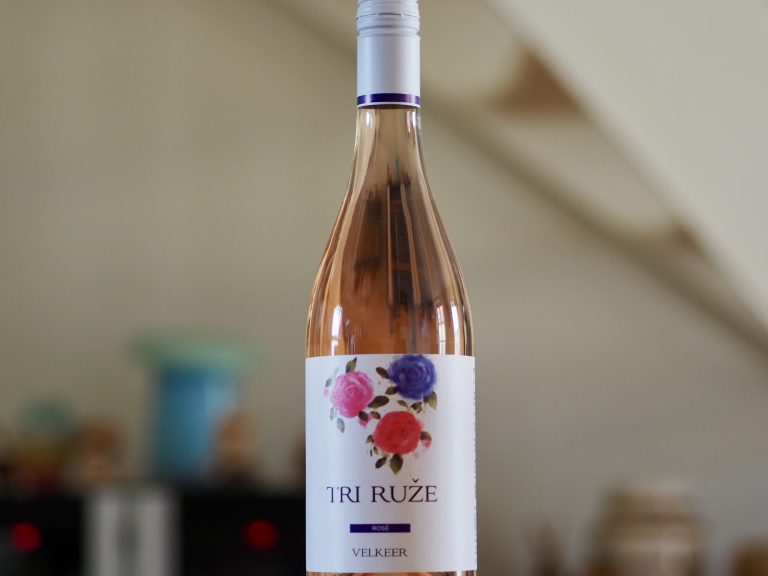
Velkeer Tri Ruže Rosé 2025 – 91 points, 4 stars
Fresh, red‑fruited rosé with strawberry, raspberry and floral notes. Light, clean and uncomplicated, mostly in the raspberry‑driven style. A pleasant and summery rosé suited to light dishes and aperitifs.
Velkeer Frankovka Modra 2024 – 92 points, 5 stars
Red‑fruited and spicy Frankovka with cherry, raspberry, light smoke and bright acidity. Juicy, light and aromatic, with a cool structure that makes it ideal for grilled dishes, poultry and tapas. A wine that shows the strength of the grape in Slovakia.
Velkeer Pinta 2022 – 96 points, 5 stars
Dark‑fruited, spicy and structured red wine made from Dunaj and Rudava. Depth, light smoke, ripe fruit and a firm grip at the edges. A surprisingly excellent wine that shows how high modern Slovak red wine can reach.
Keep an eye on Slovakia
Slovakia is a wine country that combines history, terroir and modernisation in a way that makes it both interesting and relevant for wine lovers. It is a place where you can find wines with strong personality, where local grapes offer unique expressions, and where quality is rising year by year. The Velkeer wines are just six examples among many. They show part of the region’s purity, aromatics and terroir, but they do not represent the country’s upper limits. On the contrary, they are small snapshots of a wine nation still in full development — and one that deserves far more attention than it receives today.